.png&w=3840&q=75)
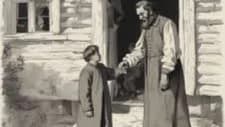
Fathers & Children, Turgenev
Saturday, April 25, 2026
1-2:30pm
Central Library
Genres
Learning & Workshops
Tickets
0 interested
Event Description
Fathers and Sons is one of the most historically significant Russian novels, credited with introducing the figure of the nihilist into literature and capturing the intellectual tensions of 19th-century Russia. Turgenev dramatizes a society in transition, where traditional aristocratic values confront rising scientific rationalism and political skepticism.
The novel’s writing style is elegant, restrained, and psychologically precise. Turgenev avoids heavy moralizing, instead revealing character through dialogue and subtle emotional shifts. This clarity and balance make the philosophical conflicts feel lived rather than abstract.
The story is beloved for its timeless portrayal of generational conflict and its nuanced treatment of its central character, Bazarov. Though he rejects sentiment, art, and tradition, his emotional vulnerability exposes the limits of pure rationalism. Readers are drawn to this tension between intellect and humanity.
Key themes include nihilism, the limits of reason, the persistence of tradition, and mortality. Turgenev suggests that while old systems may be flawed, the rejection of all values leaves a void that cannot sustain human life. The novel remains powerful for its ability to capture the moment when certainty collapses and new meaning has yet to emerge.
We will be at the Central Library in room 3-20A from 1:00pm - 2:30pm.
Fathers & Children, Turgenev
Genres
Learning & Workshops
Event Description
Fathers and Sons is one of the most historically significant Russian novels, credited with introducing the figure of the nihilist into literature and capturing the intellectual tensions of 19th-century Russia. Turgenev dramatizes a society in transition, where traditional aristocratic values confront rising scientific rationalism and political skepticism.
The novel’s writing style is elegant, restrained, and psychologically precise. Turgenev avoids heavy moralizing, instead revealing character through dialogue and subtle emotional shifts. This clarity and balance make the philosophical conflicts feel lived rather than abstract.
The story is beloved for its timeless portrayal of generational conflict and its nuanced treatment of its central character, Bazarov. Though he rejects sentiment, art, and tradition, his emotional vulnerability exposes the limits of pure rationalism. Readers are drawn to this tension between intellect and humanity.
Key themes include nihilism, the limits of reason, the persistence of tradition, and mortality. Turgenev suggests that while old systems may be flawed, the rejection of all values leaves a void that cannot sustain human life. The novel remains powerful for its ability to capture the moment when certainty collapses and new meaning has yet to emerge.
We will be at the Central Library in room 3-20A from 1:00pm - 2:30pm.
Diggin' the vibe of this event?
Similar events you might like
Based on your interests
Recommended for you
Sign up for a free account to get personalized event recommendations